

Bluetongue disease in Hesse: Requirements for animal transport
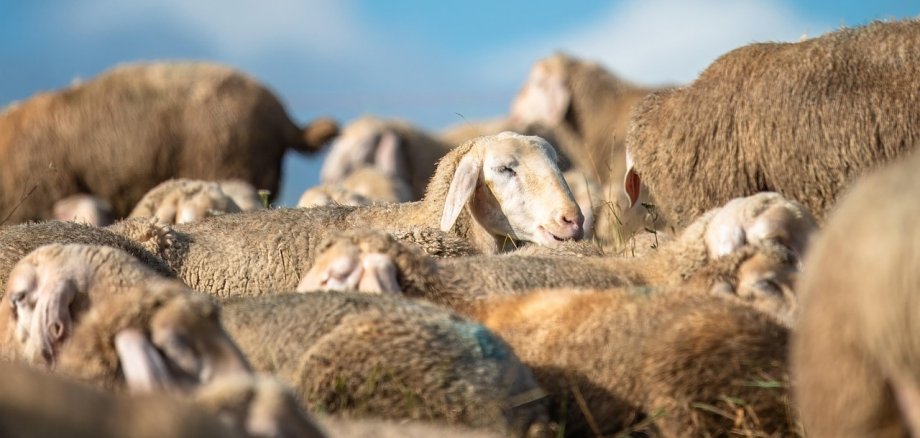
Now that bluetongue (BTV) serotype 8 has been detected in the districts of Mainz-Bingen in Rhineland-Palatinate and Bergstrasse in Hesse, as well as in the district of Fulda, the entire district of Waldeck Frankenberg is now in the so-called BTV8 trade restriction zone, which has been established in accordance with EU law with a minimum radius of 150 kilometres around the affected farms.
This means for livestock owners in the district: There are no movement restrictions within the restricted zone. However, special conditions apply to the movement of susceptible animals - in particular cattle, sheep, goats and camelids - out of the restricted zone: animals that have been fully vaccinated against BTV-8 and are within the guaranteed immunity period, as well as their young animals up to 90 days of age, may be moved out of the restricted zone. Non-vaccinated animals can only be moved under strict conditions, including insect protection measures and negative blood test results every 14 days. Clinically normal animals destined for slaughter in Germany only require a declaration from the owner that they are symptom-free. An overview of the movement rules is also available in an infographic. Detailed information on the movement rules and the course of the zone borders can be found here.
The Hessian Ministry of Agriculture urgently recommends that cattle, sheep and goats be vaccinated against bluetongue virus serotypes 3, 4 and 8. As there is no cross-protection between the serotypes and further spread is to be expected, particularly in the warmer months, vaccinations should be completed before the start of the next midge season if possible. A combination vaccine is available for serotypes 4 and 8.
Bluetongue is transmitted by small blood-sucking mosquitoes, known as midges, and affects ruminants. Affected animals show symptoms including high fever, reluctance to eat, swelling in the mouth and lameness. In severe cases, it can lead to death or deformities in young animals. The virus is not dangerous to humans. Livestock owners are asked to keep a close eye on their herds and to contact their farm vet immediately if they notice any signs of illness.