Strongly moved
STRONG MOVED
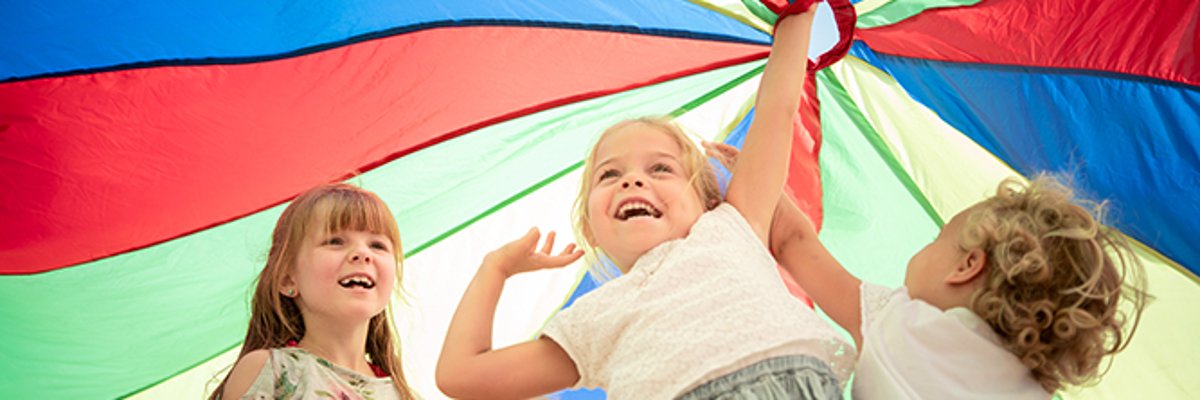
For social and democratic coexistence: In 2012, the district of Waldeck-Frankenberg launched the "STARK BEWEGT" programme. Within this framework, young people are supported in the development of their social skills through regular training sessions that promote physical activity. This has a direct positive effect on social, health and environmental behaviour. The students are also better able to meet the demands in the school context as well as in family, everyday life and later in their careers.
Programme
An opportunity for development: Time pressure, media overload, high expectations, excessive demands, loss of orientation, etc. are increasingly taking away the space for children in their families to grow into the human community. While the individual child is usually evaluated in context within the family circle, many an inner conflict is unleashed depending on the environment and situation. Schools are expected to compensate for this, but they cannot meet this high demand on their own. STARK BEWEGT sees the opportunity to create an option for the children outside of the pressure to perform or the tension by providing special training and further education for the responsible adults, in which they can develop the interpersonal skills that are important for their lives at an early age. Integration, social competence, teamwork, empathy, communication, conflict resolution and other key skills are cornerstones that are always valued in interaction.
For this purpose, STARK BEWEGT trainings are conducted throughout the country at the beginning of the first school year in combination with teacher teammates and other teammates. Different educational providers combine internal and external views and approaches in the design of learning processes. This results in numerous synergy effects with regard to the learning success and the development process of the children. In addition, teachers, exercise instructors and parents learn from each other and expand their action competences. The class is given problem-solving tasks that they can only master together. Strengths, weaknesses, but also conflicts and disturbances (e.g. violence, bullying, etc.) are discussed in the class community. Changed ways of acting to solve problems and improve teamwork are developed and transferred to everyday situations at school. This approach has a direct positive effect on social, health and environmental behaviour. The students are also better able to meet the demands in the school context as well as in the family, everyday life and later in their careers.
Training
Interact together, reflect together: The training is always conducted by two adult team members: Teacher teammates and teammates from outside the school accompany the class through the training process. Whether through the rope gate, over the chocolate river or through the spider's web - it is only possible together. The problem-solving tasks are individually designed according to the structure and goal of the class. Appropriate frame actions, which connect the individual tasks like a red thread, enable the serious examination of group processes. The tasks during the training are structured as learning circles, i.e. strengths from the first task are taken to the next. Weaknesses are analysed together and alternative approaches are tried out. This creates the basis for achieving the set learning goals.
Touched by the shared experience, the group talks about what moves them, what helps them, how they have been successful, etc. The link to everyday life is supported by a variety of reflection methods. In this way, formative moments give rise to impulses for future independent action by the group. A central role is played by the transferability between the training situation and the everyday school situation in the classroom. If there is a recognisable structural similarity between the training situation and the everyday reality, concrete measures for everyday (school) life can be worked out in the evaluation discussions. The jointly passed tasks create a sustainable basis for effective cooperation and successful teaching and learning in the classroom.
Education and training
During the training, the participants will learn to implement the STARK BEWEGT training as a method for use in school classes (primary level, secondary level 1). They will experience and discuss the training from the pupils' point of view and gradually learn how to accompany the process independently as trainers. The basis for the eight-day training is the STARK BEWEGT concept of the sports and youth work department of the Waldeck-Frankenberg district. In the annual one-day further training, the skills and abilities learned in the training are deepened through special focal points.
The participants will get to know the STARK BEWEGT training as a method for use in school classes in individually designed training sessions. On the one hand, they will experience the training from the perspective of the students, but at the same time they will also experience and discuss the process support from the perspective of the instructor in the reflection phases. Together, a possible course of training will be carried out and possible applications of various interaction exercises and problem-solving tasks with their objectives will be presented. In addition, methods of transfer to everyday school life will be discussed.